|
Here are short letters that you can easily print and mail. Select the address and text; copy and paste them into Word or whatever you use for writing. Arrange on the page to your liking. Even better is to spend a few moments individualizing the text.
You could change words, add your own remarks, use different points
from the fuller information given. Get back to us if you have a question. Or if you have the luck to receive a reply—it could be important. We'd love to know that you've written. —Guy Ottewell and Tilly Lavenás, founder members of the Amnesty International groups of Greenville, South Carolina, and Lyme Regis, England. |
|
YOU CAN RECEIVE NEW APPEALS BY EMAIL. Please go to http://groups.google.com/group/humanrightsletters If you don't see a "Join this group" link, or if you
have received an email about “Ready-made human rights letters”,
you are already a member. GET FRIENDS TO JOIN! |
|
Postage for one sheet (mark envelope AIRMAIL): |
|
These “remhurls” have been sent by email to a list of friends at irregular intervals (monthly, sometimes less, sometimes more) since 1996. Since 2008 we have used this better method of distribution. We are responsible for them; they are not an official production of Amnesty International, Survival International, or any other of our sources. |
|
You may submit a letter appeal for possible use. Please make it easy for us: Keep it short. Provide a summary of the fuller information (which we like to get in chronological order). Expect to be edited. Provide a web link if possible, or a citation of the authority for the information, e.g. for an Amnesty International Urgent Action, its number, date, and "write no later than" date. Send to guy@universalworkshop.com |
|
|

SEE YELLOW BOX AT LEFT
The first letter is recent and urgent. Others below are long-term cases on which we keep working. More letters on them are always needed.
|
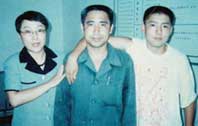
Magdy Abdel Ghaffar Ministry of Interior Fifth Settlement New Cairo Egypt email: center@iscmi.gov.eg or E.HumanRightsSector@moi.gov.eg Your Excellency, It is reported here that Ahmed Douma has been in continuous solitary confinement at Tora Prison since 3 December 2013! Ahmed Douma was sentenced for “protesting illegally.” His cell is next to a sewer. He suffers pain in knees and back, chronic headache, and insomnia. The prison administration ignores requests by prison doctors that he should be sent to a hospital. The Cairo Administrative Court has now postponed hearing his appeal until 16 May. I urge you to ensure: Yours respectfully and sincerely, It's good to send a copy to the ambassador in your country: HE Mr Nasser Ahmed Kamel Information is from Amnesty International's Urgent Action 91/17
of 24 April 2017: https://www.amnesty.org/en/documents/mde12/6072/2017/en/
|
|
HE Professor Peter Arthur Mutharika Your Excellency, As you know, people with albinism are still suffering badly in Malawi. Thousands of people with this inherited, non-contagious, incurable condition have to live in fear. They are ritually killed in the belief that their body parts will bring riches. Since December 2014, at least 14 have been killed, at least 5 others have disappeared, and there have been at least 69 other crimes such as stealing of bodies from graves. A recent case was the teen-age boy, David Fletcher, who disappeared from Malawi and whose body was found in Mozambique with hands and feet chopped off. You have condemned these attacks and called on police to arrest perpetrators. But the few arrested have been acquitted or given light sentences. Please do your utmost to bring this horror to an end. Yours respectfully and very sincerely, Full information, including further addresses to which to send
your message, is in Amnesty International's Urgent Action: http://www.amnestyusa.org/sites/default/files/f3u05116.doc |
|
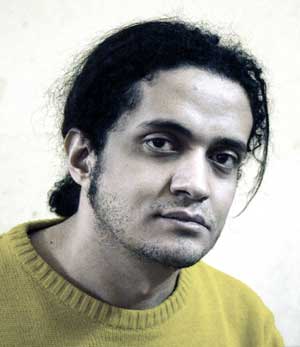
Ashraf
Fayadh, a poet, born in Saudi Arabia to Palestinian refugee parents,
was sentenced to death for apostasy (changing his religion). This
sentence was overturned, but he faces eight years in prison and
800 lashes. His Majesty King Salman bin Abdul Aziz Al Saud Your Majesty, I am glad to learn that the execution of Ashraf Fayadh has been halted. He is a prisoner of conscience, whose conviction is seriously flawed and based on false allegations. I urge that your government should drop the charges against him and release him. Yours respectfully and sincerely, Twitter: @KingSalman Ambassadors (you can address them as "Your Escellency" Ashraf Fayadh, a poet, born in Saudi Arabia to Palestinian refugee parents, was sentenced to death for apostasy (changing his religion). This sentence was overturned, but he faces eight years in prison and 800 lashes. Amnesty International's Urgent Action 265/15 of 3 February gives full information and more addresses to which your appeal can be sent. |
 Please
write/tweet to the king, and email/tweet to the ambassador in your
country.
Please
write/tweet to the king, and email/tweet to the ambassador in your
country.
|
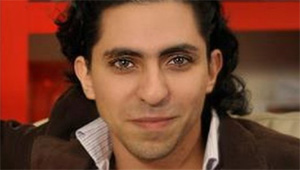
Your Majesty, I was appalled that Raif Badawi was sentenced to flogging with one thousand lashes, and that the first fifty lashes were actually administered, on January 9. It is to your credit that no more rounds of flogging have taken place so far. Please make sure that this barbarous punishment is completely canceled, and that Raif Badawi is freed. He is a prisoner of conscience, punished for exercising his right to freedom of expression.
Raif's story, and more addresses to which to send your message.
|